I’ve spent most of my adult life on a soccer field. As a player at Niagara University, professionally in Canada, Croatia, Hungary, Italy, and Iceland, and now on the beach with the Canadian National Team. I’ve been coached by people who changed how I see the game, and by people who nearly talked me out of loving it. I’ve coached kids on two continents. And somewhere in the middle of all of that, in a lot of different languages and a lot of different climates, I kept running into the same question: what are we actually trying to build here?
Not “what’s the score,” or “did we win the tournament this weekend.” The bigger question. What kind of player, and honestly, what kind of person, are we sending home at the end of a season?
I didn’t always have a good answer. Most clubs don’t. And I don’t say that as a criticism. Building a youth program that actually serves kids well is genuinely hard, harder than it looks from the sideline. But a few things changed that for me. I played and coached around the world. I earned my scouting certification, and through my experiences, I learned to evaluate players as individuals. I went back to school for early childhood education, because I wanted to actually understand how kids learn instead of just assuming I already knew. Somewhere in all of that, I started to see the shape of an answer. Wellington FC is my attempt to build it for real.
Why now
There’s never a perfect time to start something like this. But there is a right time, and I think it’s this one.
I’ve been coaching right here in Burlington for more than a decade, most of it inside one of the larger academies in the region. I’m grateful for that time, I learned a lot, and I coached some genuinely great kids. But it also meant I got to see, up close and for years, exactly what happens at scale: a talented kid can go a whole season without real individual feedback, simply because the coaching staff is spread across too many teams to watch anyone that closely. Kids with potential, who may not be as athletic or fast at the younger ages, can be overlooked by clubs chasing trophies and accolades, missing out on young players with great attitudes and a lot to offer the game. I’d also spent time, both playing and coaching, inside small, tightly-run programs in Europe, where every player’s development is something the coaching staff can actually speak to in detail, because they’re watching closely enough to do so.
I know which one I trust more. And I know which one I’d want for my own kid.
There’s a stat I come back to a lot, from research on long-term athletic development: roughly 89% of internationally dominant youth players never reach that level again as adults. Read that twice. The kids who look best at eleven are more likely not the same kids who end up thriving at twenty-one. Early results are a genuinely poor predictor of long-term outcomes — in soccer and, honestly, in most things kids do. Programs that optimize for how a team looks this season are optimizing for the wrong thing. That single fact reshaped how I think about coaching young players, and it’s the foundation everything else here is built on.
What I actually value for these kids
Technical ability matters, I’m not going to pretend otherwise. But I care much more about how a player builds that ability than how fast. We work on receiving the ball under pressure, playing with both feet, and making good decisions in tight spaces, and we do almost all of it inside realistic game situations rather than isolated drills, because that’s how the learning actually transfers. A player who looks clean in a cone drill and freezes in a match hasn’t learned the thing we’re trying to teach.
Just as important to me is game intelligence. Teaching kids to read a moment and solve it, rather than just execute a move they memorized. I’d rather coach a player who makes a slightly imperfect decision quickly and confidently than one who makes the “correct” decision a half-second too late because they were waiting to be told what to do. That instinct, that willingness to decide, is something you can only build by giving kids real decisions to make, over and over, in an environment where it’s safe to get it wrong.
And underneath the soccer, I care about the kids. My background in early childhood education isn’t a footnote on my résumé, it’s genuinely how I coach. Confidence, communication, and the willingness to try something difficult in front of other people are skills a nine or ten year-old is building everywhere in their life, not just on our field. I’ve watched a player who struggled to even join a training session at first grow into one of the more confident kids on the roster, on and off the field, and that shift matters more to me than any result we post this season. If a player leaves Wellington FC a better athlete but not a more confident, more capable person, I haven’t done my job.
What I’m hoping this becomes
I want to be honest about something: I’m not trying to build the biggest club in the region. I’m trying to build the most focused one. That’s a deliberate choice, and it means we’ll stay smaller, by design, than we technically could be. Every team is led directly by me, every player’s development runs through my own evaluation, and any supporting coach we bring in works from the same curriculum I do, not a franchised version of it. That’s the only way I know to actually guarantee a standard instead of just advertising one.
Long term, I want Wellington FC to be a place families in Halton Region trust enough to stay with for years, not just a season. A program that gives players real match reporting and licensed evaluation the way professional academies do, that eventually competes in structured league play as we grow, and that still feels, at every stage, like a place where a coach actually knows your kid’s name and how they’re doing, not just what team they’re on. Small rosters. One philosophy. Every session. That’s not a slogan to me — it’s the operating model.
I also want to change the landscape of youth development in the region. There are plenty of good coaches, who really care about the players as individuals and want to see them thrive in and out of the sport, and not just add trophies to a coach’s cabinet. Unfortunately, they get lost in an environment that encourages the opposite. So they either conform, quit or find another way.Creating a home for coaches like this to thrive, grow in their education and show that the old way isn’t a solution for every child. All kids need to be pushed outside of what is comfortable, but it’s the jobs of the coaches to create an environment where they feel comfortable being uncomfortable.
Why I need parents in this with me
Here’s the part I want to be direct about: this only works if it’s a partnership.
I can build the training environment, the evaluation process, the curriculum. What I can’t build alone is the environment a kid goes home to after a hard session, or a tough loss, or a moment where they felt embarrassed in front of their teammates. That part is yours, and it matters as much as anything we do on the field. The most confident, coachable players I’ve worked with, in any country, almost always have the same thing in common at home: parents who are genuinely curious about how their kid is developing, who let the coaching staff coach, and who reinforce effort and growth instead of just outcomes.
So my ask is simple. Show up, stay engaged, ask questions — I’d genuinely rather have a parent who asks too much than one who assumes everything’s fine. Read the match reports we send. Talk to your kid about what they’re working on, not just whether they won, or paying them based on how many goals they may have scored. And trust the process even in the weeks it doesn’t look like much is happening, because development almost never happens in a straight line.
I’m building Wellington FC because I believe there’s a better way to develop young players than what most of us grew up with. One that takes the long view, treats kids like individuals instead of a roster, and holds itself to a real standard instead of a marketing one. The founding season is where that starts. I’d love for your family to be part of it.
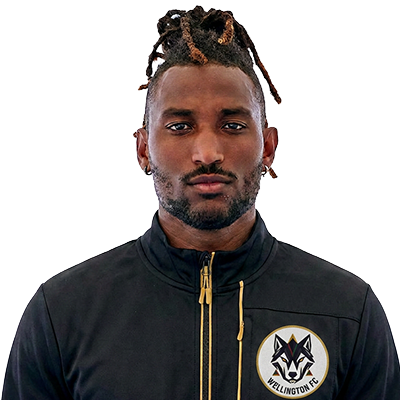
Brandon Wellington is the founder and head coach of Wellington FC, a former pro who has played and coached in five countries, a Canadian Beach Soccer National Team player and an IPSO Level 3 licensed scout.